
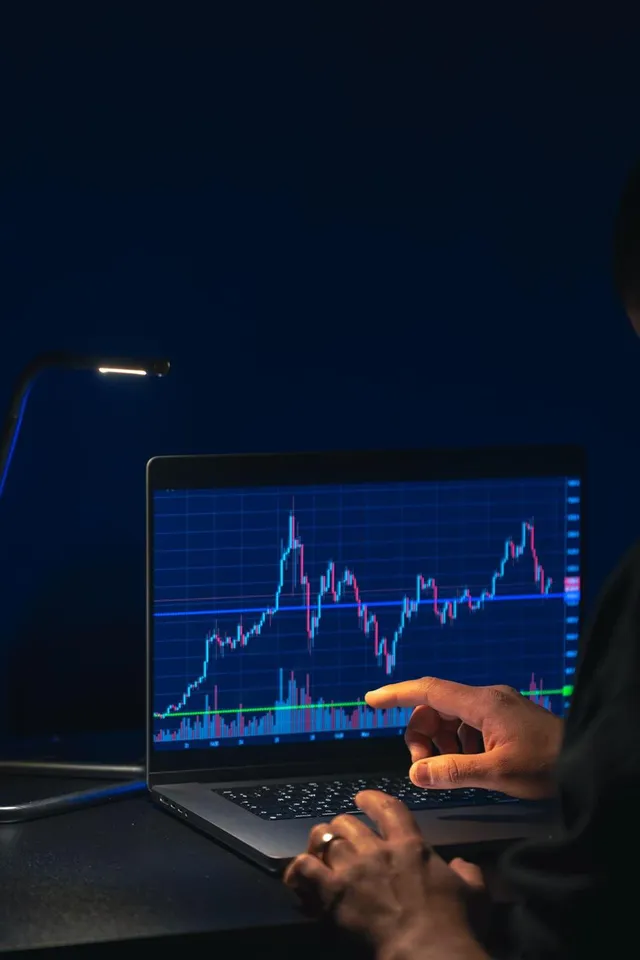
Here is an uncomfortable truth many traders discover the hard way: a strategy can be right more often than it is wrong and still lose money. The culprit is rarely the chart pattern or the indicator. It is the steady drip of costs that hides in every trade: spreads, commissions, overnight charges, slippage, and the cost of trading too often. Small leaks sink big ships. The good news is that cost is one of the few things in trading you can actually control.
Whether you are a beginner opening your first demo account or an experienced trader refining a system, choosing the best broker for MetaTrader 5 and designing your strategy around costs can make the difference between breaking even and staying in the game. Here is a practical, step-by-step approach.
What "Cost-Efficient" Really Means
A cost-efficient strategy is one where the expected profit per trade comfortably exceeds the total cost of taking it. That cost is broader than most people think:
● Spread: the gap between buy and sell prices, paid on every trade.
● Commission: a fee charged per lot on some account types.
● Swap or overnight financing: the cost of holding positions past the daily rollover.
● Slippage: the difference between the price you expected and the price you got.
● Platform and tools: VPS hosting, data, or signal subscriptions.
● Funding and withdrawal costs: fees, plus currency conversion if your account currency differs.
Add them up, and you have your real cost of trading.
Step 1: Know Your All-In Cost per Trade
Before building any strategy, calculate what a single trade costs you in pips or in money. For example, if you trade a pair with a one-pip average spread and your average winning trade is five pips, spreads alone eat a fifth of your gross profit. A scalping system aiming for two or three pips would struggle far more.
A useful rule of thumb: the smaller your average profit target, the more sensitive you are to costs. Longer-term strategies with larger targets naturally dilute the impact of the spread, but they may face more swap charges. Understand which side of that trade-off fits your style.
Step 2: Choose Instruments and Sessions Wisely
Liquid markets generally offer tighter spreads and smoother execution. Major currency pairs, gold, and major indices tend to be cheaper to trade than exotic pairs. Timing matters too. Spreads are often tighter when markets are busiest, such as during the London and New York overlap, and wider during quiet hours or around major news releases. Build your strategy around instruments and sessions where costs are lowest, and your edge is clearest, instead of trading everything, all the time.
Step 3: Use Order Types and Execution Smartly
MetaTrader 5 offers several order types, including market, limit, stop, and stop-limit orders. Limit orders can help you control entry prices and may reduce slippage, while market orders prioritize speed. Using each one deliberately keeps execution costs predictable. Also avoid trading right into high-impact news, when spreads can widen suddenly. Check an economic calendar and decide in advance whether to stand aside.
Step 4: Build Risk Management Into the Strategy
The cheapest loss is the one you never take. Risk management is not separate from cost efficiency; it is part of it. Core habits include:
- Risk a small, fixed percentage per trade, commonly 1 to 2 percent of the account.
- Always use a stop loss, and place it based on market structure, not wishful thinking.
- Size positions according to stop distance, not according to confidence.
- Use leverage carefully. High leverage magnifies both gains and losses.
- Limit trade frequency. Overtrading multiplies costs without improving results.
A trading journal that records entries, exits, costs, and reasons will quickly show where money is leaking.
Step 5: Select the Right Broker and Account
Your broker influences your costs more than almost any other decision. Finding the best broker for MetaTrader 5 means looking beyond headline marketing and comparing the details that affect your bottom line:
● Spreads and commissions on the instruments you trade.
● Execution speed and reliability during volatile periods.
● Deposit and withdrawal fees.
● Regulation and segregation of client funds.
● Range of markets from one account.
● Account types that match your capital and trading style.
● Support availability and a demo account for testing.
Compare these factors using a demo account or a small live balance before scaling up. The cheapest quote on paper is not always the cheapest in practice.
Step 6: Backtest With Costs Included
One of MetaTrader 5's biggest strengths is its built-in Strategy Tester, which lets you test trading systems and Expert Advisors against historical data. For realistic results in MT 5 trading, make sure your tests include spread, commission, and swap assumptions, and use the most accurate modeling mode available.
A backtest that ignores costs can make a mediocre strategy look brilliant. Look beyond total profit. Check the profit factor, maximum drawdown, average trade, and the number of trades. If a strategy needs very frequent trading to be profitable, its edge may disappear once real costs are applied.
Step 7: Forward-Test and Review
After backtesting, run your strategy on a demo account, then on a small live account. Compare actual costs, such as real spreads and slippage, with your test assumptions. Review results monthly: Which trades cost the most? Which sessions perform best? Can you reduce trades without reducing profit? Disciplined review is what turns decent MT 5 trading into sustainable, efficient trading. Trading leveraged products such as forex and CFDs carries a high level of risk and may result in the loss of your invested capital. This article is for educational purposes only and is not financial advice.
Conclusion
A cost-efficient strategy is built on awareness: know every cost, trade where conditions are favorable, manage risk consistently, test realistically, and review regularly. For MT 5 trading, work with a broker that offers transparent pricing, reliable execution, and the tools you need. Let your strategy earn its edge after costs, not before them. Start with a demo, keep position sizes modest, and improve step by step. Over time, small savings and steady discipline can compound into a meaningful advantage.
VPFX is a trading platform provider offering MetaTrader 5 access to forex, metals, energies, indices, and shares from a single account. They highlight tight spreads from 0.0 pips on EUR/USD, zero deposit fees, segregated client funds, and 24/5 support, with demo accounts available for testing strategies.